In the world of agave spirits, we often get caught up in the romanticism of tradition. We talk about legends, lands, and artisans. However, behind every drop that reaches the glass, there is a chemical process that allows for no shortcuts. Fermentation is not magic; it is a battle of molecular precision that defines whether a product becomes a masterpiece or a mediocre spirit.
While Tequila and Mezcal share a common origin, their chemical paths diverge radically. The difference lies not just in the oven, but in how we manage microbiological activity within the tanks. While modern Tequila, in its pursuit of efficiency, utilizes selected yeasts and controlled fermentation to ensure batch-to-batch consistency, Mezcal bets on “controlled instability” that challenges industry standards.
This technical divergence is supported by critical factors that are often overlooked, yet dictate commercial success:
- Fiber management: In traditional Mezcal, fermentation often includes agave fiber (bagazo), which contributes complex phenolic compounds and fatty acids. In Tequila, extracted juice is prioritized for programmed, clean purity. This is not an aesthetic choice; it is an engineering decision that drastically alters the final mouthfeel.
- Microbiological diversity: Tequila relies on Saccharomyces cerevisiae strains selected in a lab, minimizing risk. Conversely, Mezcal embraces the biodiversity of its environment, making each batch an irreplicable ecological variable. Financially, this raises a dilemma: are you selling a consistent brand or a unique, artisanal experience?
- Hydrolysis kinetics: The speed of autoclaves in Tequila production contrasts with the slow carbonization of earthen ovens in Mezcal. This technical difference defines the scalability ceiling for each category; attempting to scale Mezcal without altering its baking methodology usually results in a total loss of its sensory profile.
This operational difference is critical for any brand looking to scale. In our previous article, “Tequila Strategy: Scaling Production Without Losing Craft Quality,” we saw that a brand’s design holds no value if it is not backed by infallible product engineering. What happens inside the fermentation tank is not merely a biological process; it is the financial foundation of the reputation you are trying to build on the outside.
Many brands fail by attempting to replicate a flavor profile without understanding its molecular basis. Post-distillation dilution, for instance, is a technical decision that can dismantle the architecture that took so much effort to build. When a distiller adds water indiscriminately to adjust proof, they alter the solubility of essential oils and esters, destroying aromatic balance. If your process is not scalable and consistent, your brand narrative will always be fragile. You cannot sell exclusivity with a liquid you cannot standardize; that is not craftsmanship—it is chance.
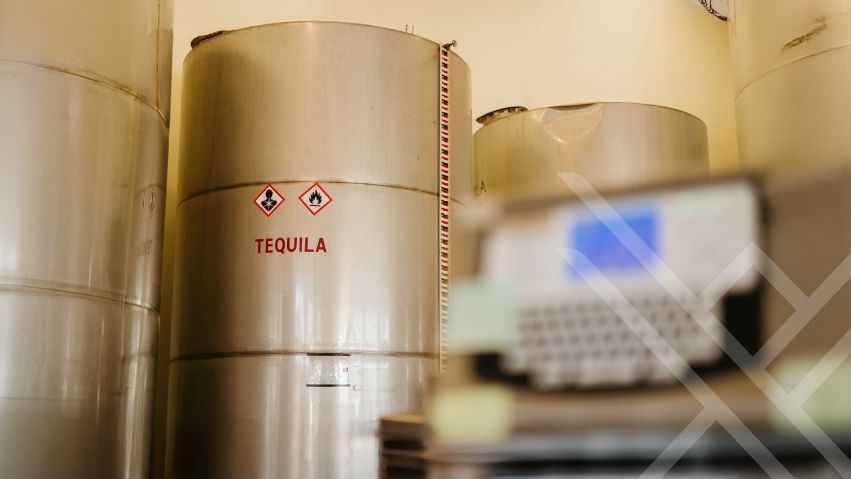
At Aceves Spirits Co., we understand that fermentation is the phase where profitability margins and sensory quality are either won or lost. Consistency is the greatest asset of a luxury brand; without it, marketing spend is capital wasted. We do not just bottle stories; we engineer high-performance liquid assets. We unify the internal architecture of your spirit with a structural branding strategy that ensures what the consumer perceives on the label matches exactly with the precision of the liquid on the palate.
The ultra-premium market no longer forgives inconsistency. The gap between a brand that just “packages” and a brand that “designs from the source” is widening. If you are ready to stop guessing and start engineering legacies, it is time to professionalize your liquid engineering.
Does your spirit reflect the ambition of your brand?
Visit acevesspirits.com to discover how we transform the science of fermentation into a competitive advantage, and let’s design the future of your brand together.