In the world of fine wine, the concept of terroir—the unique environmental context that shapes a harvest—is taken as absolute law. Yet in spirits, industrialization long pushed the industry toward aggressive homogenization, training consumers to expect identical flavor profiles regardless of origin. Today, as the ultra-premium sector demands authenticity, mezcal has emerged as the definitive champion of liquid geography. But here is the critical operational reality that most brand owners oversee: terroir is not a romantic storytelling device; it is an active biochemical variable that dictates yield, flavor profile, and long-term scalability across all mezcal-producing regions.
To build a competitive, high-tier mezcal brand, understanding how regional soil chemistry influences agave biology is not an academic exercise. It is a fundamental pillar of product development and strategic brand architecture.
Here are four essential principles that define how soil and regional geography dictate elite mezcal profiles:
1. Regional Soil Chemistry as Flavor Architecture
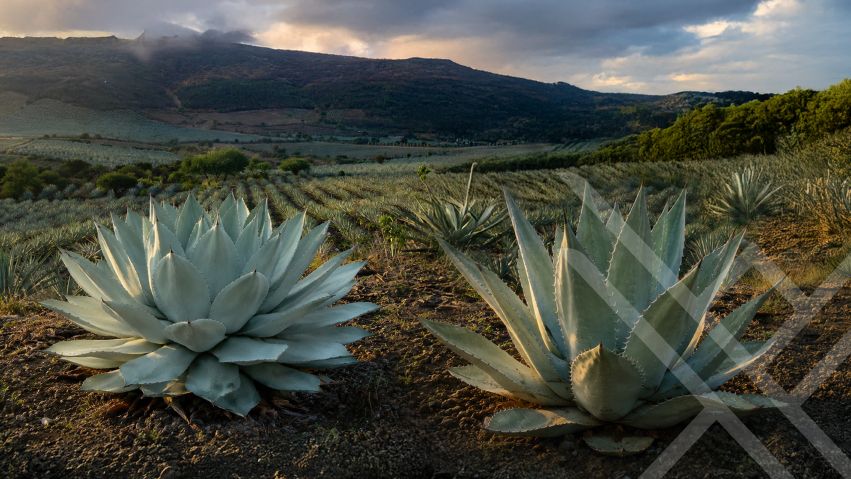
Agave plants sit in the ground for anywhere from seven to over twenty years, absorbing the exact mineral signature of their environment. Agaves grown in the volcanic, iron-rich soils of the Central Valleys yield drastically different sugar concentrations and acidic precursors than those harvested from the limestone-heavy soils of Guerrero or the dry, mineral-dense high plateaus of San Luis Potosí and Durango.
Volcanic soils tend to produce intense, earthy, and spicy notes; limestone cultivates bright, mineral, and citrusy profiles; while chalky, arid soils give rise to herbal, grassy, and deeply complex aromatic structures. Soil composition writes the genetic blueprint of your liquid long before a fire is lit in the pit.
2. Environmental Stress and Chemical Concentration
Soil architecture directly controls drainage and moisture retention, which varies wildly across Mexico’s mezcal states. In the high-altitude, rocky terrain of Durango or the steep, arid mountains of Puebla, wild species like Agave durangensis or Agave potatorum undergo controlled environmental stress. This stress forces the plant to concentrate its complex fructans (agave sugars) and secondary metabolites as a survival mechanism. Distilled, these agaves yield a richer, more viscous mouthfeel and an extraordinarily long finish.
Conversely, more fertile soils with higher water retention yield larger plants with diluted sugars, resulting in a lighter profile if not managed through precise production cuts.
3. The Microbiome of Place and Species Synergies
Terroir extends far beyond root systems; it governs the surrounding air, altitude, and microclimate. Native yeasts and wild bacteria inhabiting the soil in a humid forest in Michoacán dictate fermentation kinetics completely differently than the microflora in the dry desert of Zacatecas or Tamaulipas.
Furthermore, terroir acts in tandem with species variance—a Cupreata in Guerrero absorbs and expresses soil nutrients differently than an Espadín in Oaxaca or a Salmiana in San Luis Potosí. True terroir is an unrepeatable biological fingerprint unique to each state’s ecosystem.
4. The Consistency Trap: The Industry’s Greatest Bottleneck
The most critical operational failure in the mezcal sector is inconsistency. Most brands struggle to deliver the exact same sensory experience from one batch to the next, hiding behind the excuse of “artisanal variance” to justify quality fluctuations. While geographical variance should create celebrated nuances, a true ultra-premium brand requires absolute reliability.
If your core flavor profile shifts drastically between shipments, you don’t have a rich terroir—you have an unpredictable supply chain that alienates importers, bartenders, and consumers alike.
This deep dive into agricultural origin is the natural progression of our recent analysis, “Additive-Free Certification: Marketing Tool or Quality Standard?” In that discussion, we established that true liquid purity cannot be claimed through a label; it must be engineered into the molecular structure of the spirit from the very beginning. When developing a mezcal—whether sourced from Durango, Guerrero, Michoacán, or Oaxaca—that engineering starts at ground level. You cannot construct a pure, additive-free masterpiece if you do not understand the soil dynamics and endemic agave species powering your liquid asset.
At Aceves Spirits Co., solving this industry bottleneck is at the core of our value proposition. We don’t view regional terroir as an uncontrollable variable; we treat it as a master design input. Through proprietary process controls, rigorous cut parameters, and chemical profiling, we eliminate batch-to-batch volatility without stripping the liquid of its authentic regional identity. We bridge the gap between traditional endemic sourcing across the official Denomination of Origin and strict technical management, ensuring your private label delivers the exact same elite profile every single time.
The ultra-premium market no longer accepts generic spirits wrapped in beautiful packaging, nor does it tolerate volatile quality under the guise of craft production. It demands liquid integrity root-deep in origin and unyielding in execution.
Is your mezcal profile designed by soil science and guaranteed by engineering, or left to chance?
Visit Aceves Spirits Co. at acevesspirits.com to discover how we professionalize private label development, transform regional origin into scalable brand equity, and architect world-class agave spirits from the ground up.