The global cocktail renaissance has permanently transformed on-premise beverage economics. Behind the bar, mezcal has evolved from an occasional smoky novelty into a foundational spirit, competing directly with rye, gin, and classic agave spirits in elite cocktail programs across London, New York, and Tokyo. Yet as top beverage directors integrate agave into modern culinary mixology, a nuanced technical debate has surfaced between purists and creators.
While connoisseurs rightly revere mezcal as an unadulterated spirit best savored neat in a copita to appreciate its terroir and delicate aromas, modern bar programs demand versatile liquid profiles. When a spirit is called upon to perform within sophisticated, culinary-driven drinks, standard commercial formulations often fall short: they either present an aggressive, one-dimensional smoke that bullies every adjacent ingredient, or lack the structural proof needed to hold their character alongside complex botanicals, vermouths, and bitters.
Designing an intentional, cocktail-ready profile without sacrificing the spirit’s artisanal soul is a sophisticated exercise in liquid engineering.
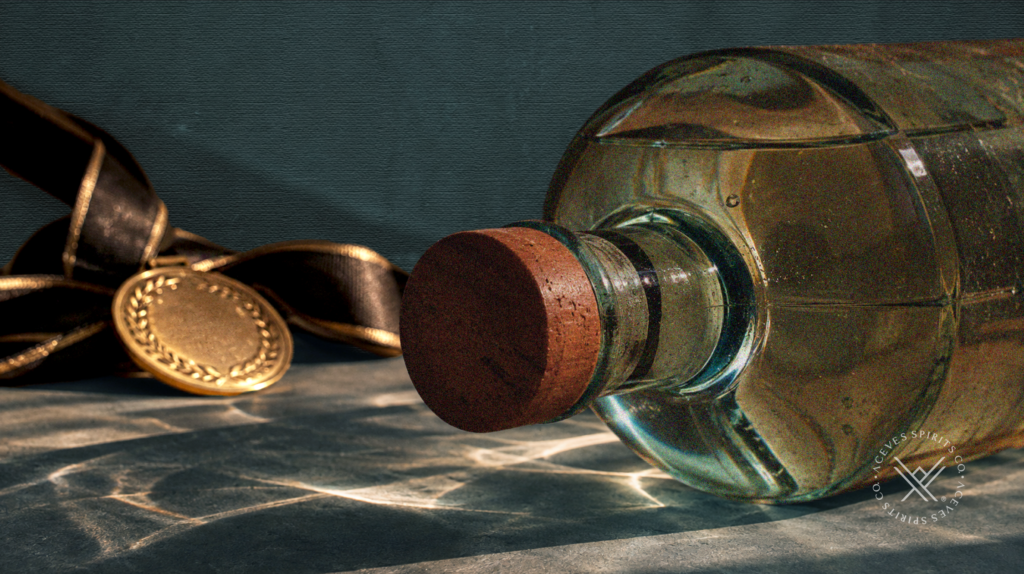
For spirits entrepreneurs, craft distillers, and portfolio managers, formulating a mezcal with exceptional mixology utility requires mastering 4 innovative technical pillars:
1. Proof Architecture and Ethanol Integrity
The standard retail bottling strength of 40% ABV (80 proof) often limits versatility. In high-level beverage design, a spirit requires an engineered bottling range between 43% and 47% ABV. Bottling at this deliberate proof point preserves volatile aromatic compounds, ester density, and structure. It ensures the agave’s natural vegetal backbone and complex aromatics remain crisp, assertive, and distinct when integrated into multi-ingredient builds, all while retaining enough body to be poured neat for classic tasting flights.
2. Calibrating Smoke: Volatile Phenols vs. Agave Sweetness
In commercial perception, smoke is often mistaken for quality. In reality, excessive smoke frequently masks undercooked piñas, rushed fermentations, or broad distillation cuts. World-class beverage directors seek culinary harmony, not an ashtray. Liquid innovators calibrate the sensory profile by managing the density of guaiacol and syringol—the volatile phenolic compounds absorbed during the underground earthen pit roast. Balancing these smoky phenols against rich, caramelized agave sugars yields a balanced, fruit-forward liquid that integrates seamlessly with modifiers rather than overpowering them.
3. Strategic Ester Profiling via Multi-Varietal Ensamble Distillation
While single-varietal Espadín remains the standard workhorse of the category, modern formulation achieves sensory depth through precision blending (ensambles). Incorporating controlled ratios of wild varieties—such as Cirial (Agave karwinskii) for sharp minerality, or Tobalá (Agave potatorum) for high-ester floral and tropical fruit aromatics—injects dynamic top notes into the spirit. Co-fermenting or blending these varietals at the formulation phase builds layered complexity, giving creators a multi-dimensional foundation that elevates sophisticated serves like Mezcal Negronis and agave-forward aperitifs.
4. Hydrodynamics and Emulsion Dynamics
Professional applications require physical stability and aromatic release. Additive-free artisanal agave distillates contain long-chain fatty acid ethyl esters that contribute directly to a velvety, coating mouthfeel. Innovative liquid architects carefully monitor aeration kinetics and filtration thresholds post-distillation. The goal is to stabilize these delicate emulsions, guaranteeing absolute clarity and persistent texture across varied temperatures, whether gently chilled in a service glass or served at ambient room temperature in a traditional tasting vessel.
This scientific calibration of liquid builds directly upon our sensory exploration, “Mezcal Terroir: How Soil Influence Defines Agave Profiles Across Mexico.” In that study, we examined how regional microclimates, endemic mineral concentrations, and native soil chemistry write an irreplaceable molecular blueprint into the raw plant tissue. In craft mixology, that underlying terroir remains the core identity. Formulating for culinary versatility does not mean muting terroir; it means honoring the specific mineral acidity and botanical esters born in the field, aligning distillation cuts to ensure this geographic DNA remains radiant and recognizable in any setting.
At Aceves Spirits Co., we approach formulation through the dual lens of multi-generational agave lineage and cutting-edge sensory design. While we celebrate the timeless tradition of sipping mezcal in its purest form, we also recognize the evolving demands of global luxury hospitality. We partner with visionary brand owners to custom-engineer bespoke agave expressions tailored to specific proof architectures, aromatic balances, and portfolio strategies. From controlling pit-roasting thermals and wild fermentation ecosystems to precision cuts at the still, our integrated team empowers brands to earn the reverence of both traditional purists and the world’s most demanding beverage directors.
A truly exceptional agave profile is not an accident of nature; it is engineered with purpose.
Is your mezcal profile engineered with the structural balance to captivate both purists and world-class beverage directors?
Visit Aceves Spirits Co. at acevesspirits.com to discover how we professionalize private label development, formulate market-defining agave profiles, and architect scalable spirits brands designed to lead the industry.